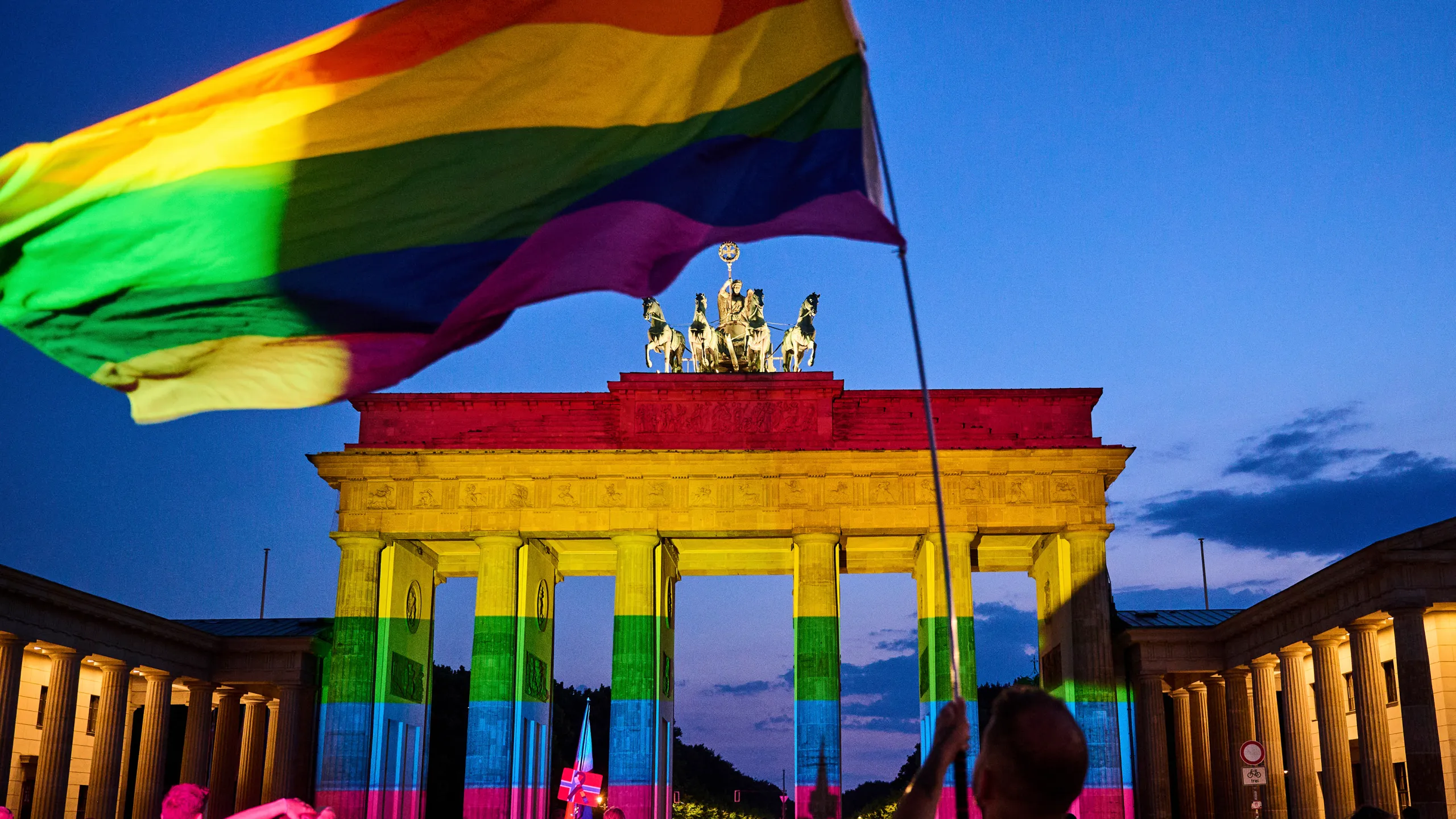
The German parliament has passed a law making it easier for citizens and residents to legally change gender. It’s also introducing hefty fines – in specific circumstances – for disclosing someone’s prior registered name or gender without consent. Previously, changing your registered gender required a doctor’s certificate and the approval of a family court.
Now over-18s can change to male, female or diverse, a third gender option that already exists under German law. Three months on from a request for such a change, applicants will then have to appear at a registry office in person.
You can also request that no details regarding your gender are registered at all. The intentional and harmful disclosure of someone’s prior name or legal gender could attract a fine of up to €10,000.However, there are exceptions – for example if it’s a legal requirement due to court proceedings or police investigations.
First names will need to represent the new legal gender – so a male entry requires a recognised male first name while a female entry requires a recognised female first name.
Fourteen- to 18-year-olds will need the consent of parents or legal guardians, while under-14s will need their parents or legal guardians to make the declaration.
No further change or reversion can be made within 12 months of an application being granted. The law allows for those operating spaces – such as women’s gyms and changing rooms – to still decide who has access to them.
Applications from male to female or to diverse, made less than two months prior to a national defence emergency, will be put on hold.
The new rules will come into effect on 1 November having been promised in the “traffic light” coalition agreement.Chancellor Olaf Scholz said: “We show respect to trans, intersex and non-binary people – without taking anything away from others. This is how we continue to drive the modernisation of our country. This includes recognising realities of life and making them possible by law.”
Nyke Slawik, from the Greens – who is transgender – said it was a “first step” towards a society which allows self-determination for trans people.
Conservatives and the far-right AfD were among those to speak out against the plans with warnings the legislation could be misused.
Concerns were also voiced about the impact on young people. “Minors, without proper consultation, could choose a path they might regret later on,” said the CDU’s Mareike Wulf. The Self-Determination Act was passed with 374 ayes to 251 no’s and 11 abstentions.
Source: BBC
In other news – Beyonce’s country album tops Billboard chart
Beyonce’s blockbuster country album “Cowboy Carter” has debuted atop the Billboard 200 chart—the eighth number-one album of her storied career.

She also became the first Black woman to top Billboard’s Top Country Albums chart with the 27-track second act in her “Renaissance” trilogy. Read more
-
 Pope Francis dies aged 88 just hours after meeting JD Vance
-
 India Signals Readiness to Pursue Stronger, Strategic China Business Ties After Border Dispute Resolution
-
 South Korea’s president Yoon Suk Yeol faces calls to resign
-
 South Korea troops try to storm parliament after martial law declared
-
 Indian police arrest seven for breaking into Bangladesh consulate
-
 Saudi Arabia’s MBS takes up new Middle East crises in UAE visit
-
 President Joe Biden grants full unconditional pardon to son Hunter
-
 Justin Timberlake drops big news about his Forget Tomorrow World Tour
-
 Vladimir Putin warns of using all weapons if Ukraine acquires nuclear arms
-
 Donald Trump warns BRICS nations of 100% tariffs over plans against US dollar