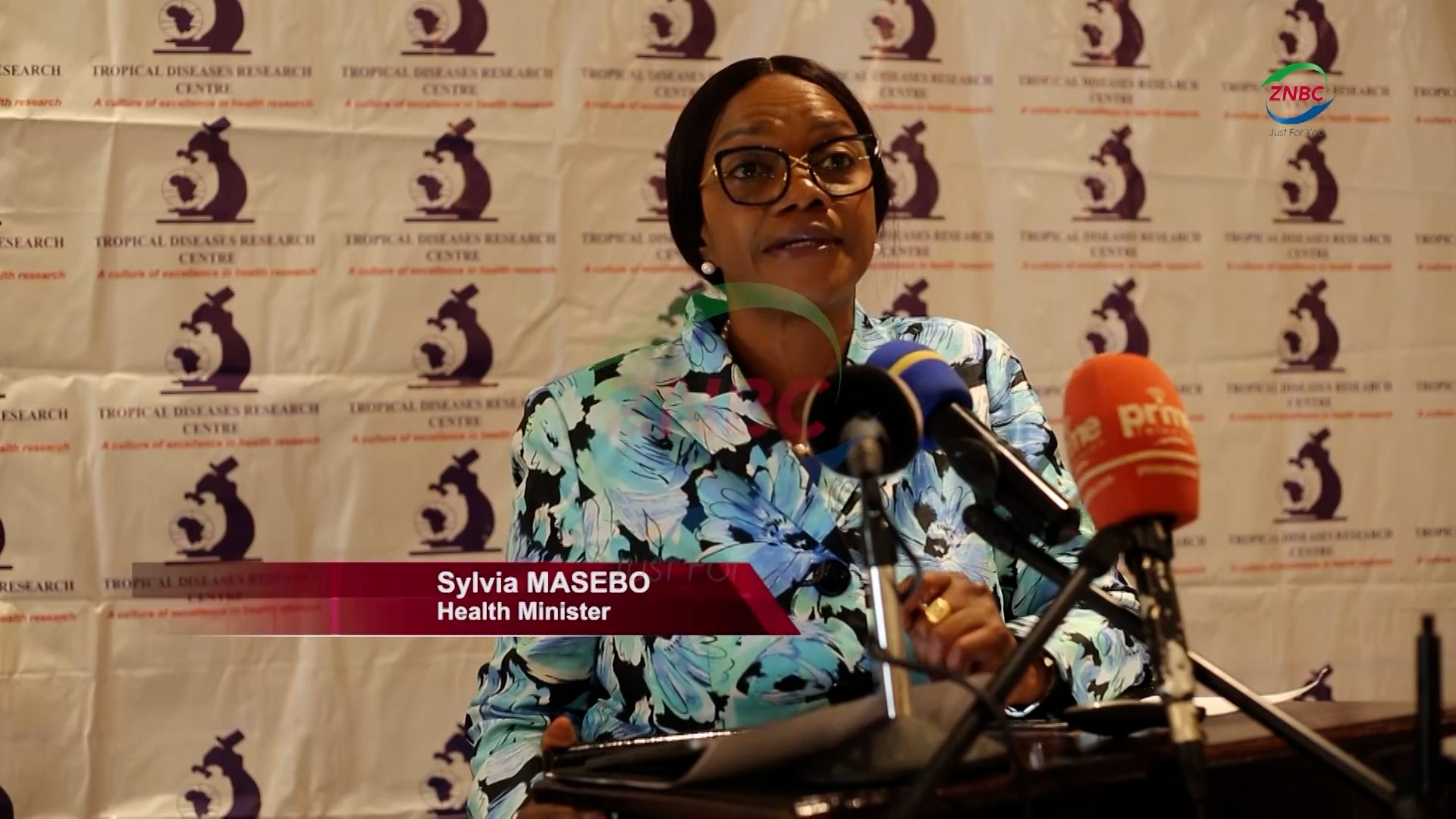
According to SYLVIA MASEBO, minister of health, children in the nation still face a significant risk of contracting measles and rubella since they have not yet built up an immune system or protective shield.
After reacting to a research conclusion from the SISS (Strengthening Immunization Systems via Sero-surveillance Project) on children who skipped Child Health Week rituals and campaign health services, Ms. MASEBO made this disclosure.
This was included on the agenda for today’s stakeholder meeting in Lusaka on improving Immunization Systems through Sero-surveillance in Zambia.
With sponsorship from Hopkins University, the research was conducted by the Tropical Diseases Research Centre (TDRC), Macha Research Trust, University Teaching Hospital Virology laboratory, and Zambia Statistic Agency during the week of child health in November 2020.
She said the primary health care services, which include vaccines, that are necessary for every child will be provided by the Ministry of Health in coordination with other partners.
And GERSHOM CHONGWE, the chair of the TDRC Board, stated that his organization is dedicated to making sure that research is done correctly in order to provide the government with policy direction.
Director General of the Zambia National Public Health Institute (ZNPHI), ROMA CHILENGI, noted that research is essential to obtaining accurate information on diseases in the nation.
-
 President Hakainde Hichilema Mourns the Passing of Edgar Lungu
-
 Edgar Lungu has Died
-
 President Hichilema Pays Tribute to Pope Francis at Solemn Requiem Mass
-
 Government Intensifies Soil Analysis Campaign to Boost Agricultural Productivity
-
Businessman acquitted in high-profile corruption case linked to ex-President Lungu
-
 Teenage girl found dead near Kamwala South Secondary School, police launch investigations
-
 Vice President calls for stronger engagement between UNZA management & student leaders
-
 President Hichilema sets 1,000 megawatt solar energy target for 2025
-
 RPP backs Vice President’s call to accelerate national gender policy implementation
-
 Kariba North Bank Power Station to boost generation with increased water allocation